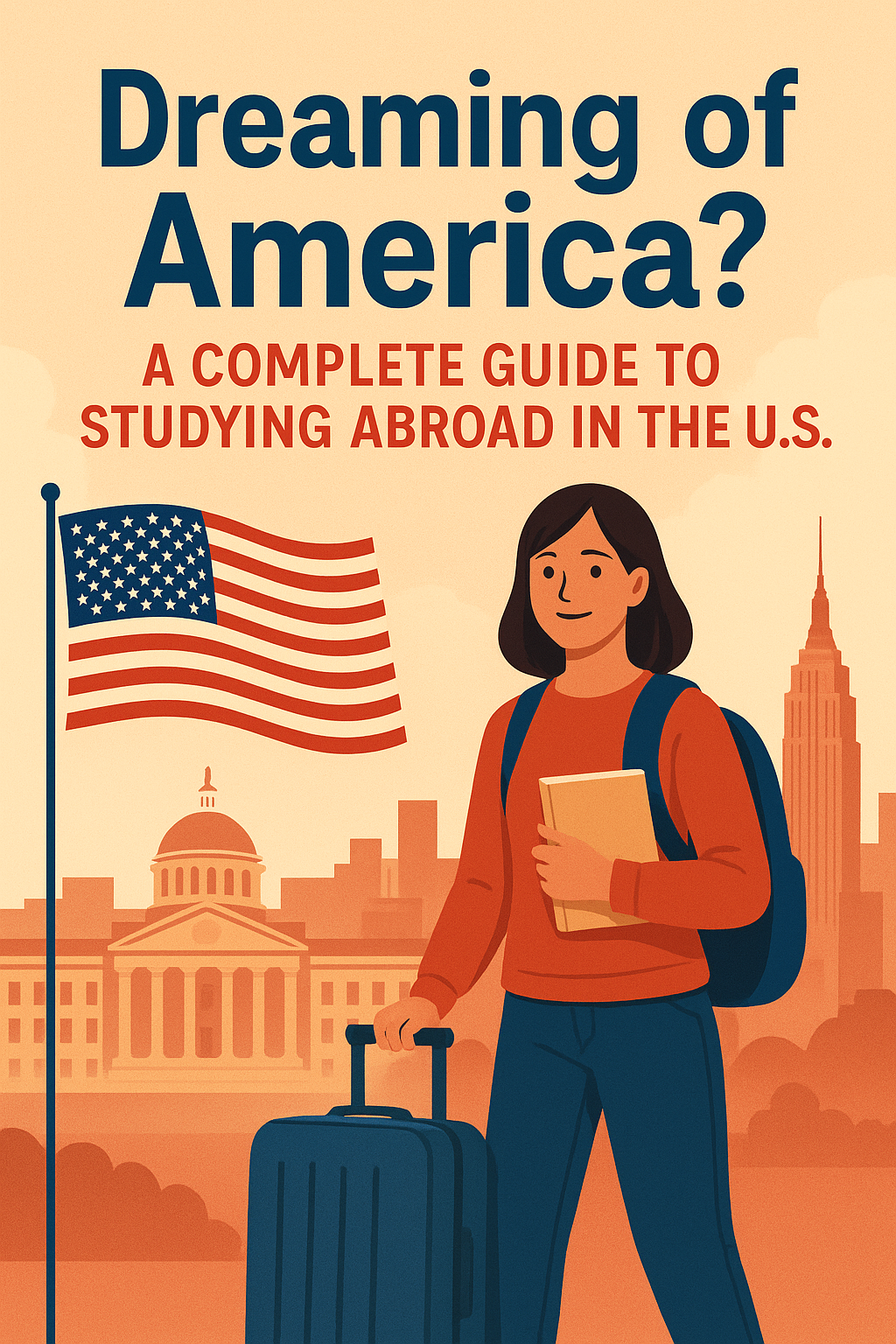
Dreaming of America? A Complete Guide to Studying Abroad in the U.S.
🌟 Introduction
The United States has always been a top destination for international students. With world-class universities, cutting-edge research facilities, and diverse cultural experiences, it’s no surprise that millions of students dream of studying in America.
If you’re one of them, this guide will help you understand everything — from choosing the right university to securing a visa and adjusting to life in the U.S.
🏫 1. Why Study in the U.S.?
The U.S. offers unmatched academic opportunities and flexibility.
Top reasons to study here include:
- Global recognition of U.S. degrees
- Wide variety of programs and majors
- Research and internship opportunities
- Strong career support and alumni networks
- Exposure to multicultural experiences
💡 Fact: The U.S. is home to 17 of the world’s top 25 universities!
🔍 2. Choose the Right University and Program
Before applying, explore universities that align with your goals.
Popular fields for international students:
- Computer Science and Engineering
- Business and Management
- Health and Life Sciences
- Arts, Media, and Design
Use platforms like EducationUSA, College Board, or QS Rankings to compare programs, tuition, and locations.
Check each school’s admission requirements and deadlines carefully — many open applications up to a year in advance.
💰 3. Explore Scholarships and Financial Aid
Studying in the U.S. can be expensive, but many scholarships can help cover costs.
Top scholarship programs include:
- Fulbright Foreign Student Program
- Hubert H. Humphrey Fellowship
- AAUW International Fellowships
- University-specific scholarships (Merit or Need-based)
📘 Tip: Write a strong personal statement and get recommendation letters that highlight your leadership and community involvement.
🧾 4. Apply for a U.S. Student Visa
Once you receive an offer letter and Form I-20 from your university, it’s time to apply for a visa.
Types of Student Visas:
- F-1 Visa: For academic or language programs
- J-1 Visa: For exchange programs
- M-1 Visa: For vocational or technical courses
Visa Steps:
- Pay the SEVIS fee
- Complete the DS-160 form
- Schedule a visa interview at your nearest U.S. Embassy
- Bring documents like I-20, passport, financial proof, and acceptance letter
🗣️ Interview Tip: Be confident and clear about your academic goals and intent to return home after studies.
🧳 5. Prepare for Life in the U.S.
Moving abroad can be exciting and challenging.
Here’s what to keep in mind:
- Arrange housing before arrival
- Open a local bank account
- Get health insurance coverage
- Understand cultural differences and classroom etiquette
- Join student organizations to make friends faster
🌎 Pro Tip: Most U.S. universities have international student offices to support you with orientation, visa questions, and cultural adjustment.
🎯 6. Working While Studying
Students on F-1 visas can work part-time (up to 20 hours per week) on campus.
You can also apply for:
- CPT (Curricular Practical Training) – internships during your degree
- OPT (Optional Practical Training) – work experience after graduation
This experience boosts your resume and helps you transition into a global career.
💬 Conclusion
Studying abroad in the U.S. is a life-changing experience filled with academic growth, personal development, and global exposure. With the right preparation — from selecting universities to handling visas — your American dream can become reality.
So pack your bags, believe in yourself, and take the first step toward studying in the land of endless opportunities. 🇺🇸🎓